In a Kuwait ceiling void, chilled water, domestic water, drainage and cable tray all want the same route. A strut trapeze puts them on one bearer hung from a pair of rods. This guide works through that assembly from the structure down — channel, rod, beam clamp or anchor, and the clamp or roller that holds each pipe — then takes the same hardware into a riser shaft and sets out which finish belongs where. Loads and spacing are left out on purpose: they belong to the engineered support schedule.
What a trapeze is, and when it beats single hangers
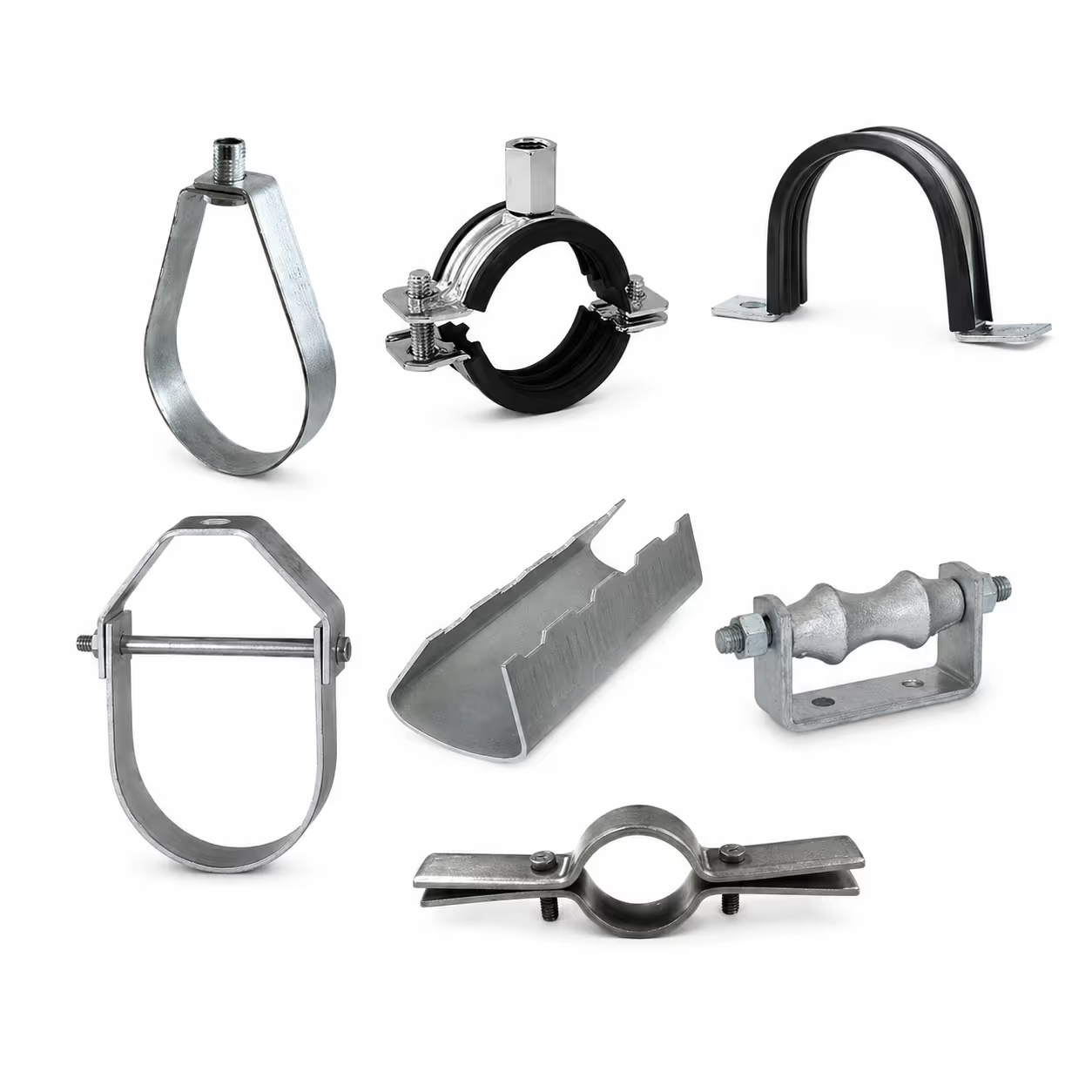
A single hanger is one rod per pipe: a beam clamp or concrete anchor at the top, a threaded rod drop, and a clevis hanger (MSS SP-58 Type 1) carrying the pipe at the bottom. It is the right answer for an isolated line, and it is what most consultants draw by default.
A trapeze replaces several of those drops with two. The rods carry a horizontal bearer of strut channel, and every service on the route is fixed to that bearer — pipes with U-bolts, clamps or rollers, a duct resting on the channel, a cable tray bolted across it. The case for it on a multi-service run is practical:
- Fewer fixings into the structure. Each rod needs a beam clamp or an anchor. A trapeze carrying four services needs two fixings where four single hangers need four, and every fixing into a post-tensioned slab or a fireproofed beam is one more thing to coordinate.
- One elevation, one grid. Services sharing a bearer sit at a consistent level, which is what makes a crowded corridor ceiling buildable and inspectable.
- Room for the next trade. A channel nut can be fixed anywhere along the channel, so a service added late in the programme is bolted to the existing bearer instead of needing a new drop.
- No site welding. The whole frame is bolted, which keeps hot-work permits off the job and lets the frame be adjusted after the services are in.
The trade-off is that a trapeze is a small structure carrying the combined weight of everything on it, so it is designed from the full service list, on the support schedule, rather than improvised on site.
Strut channel: profiles, gauges and slots
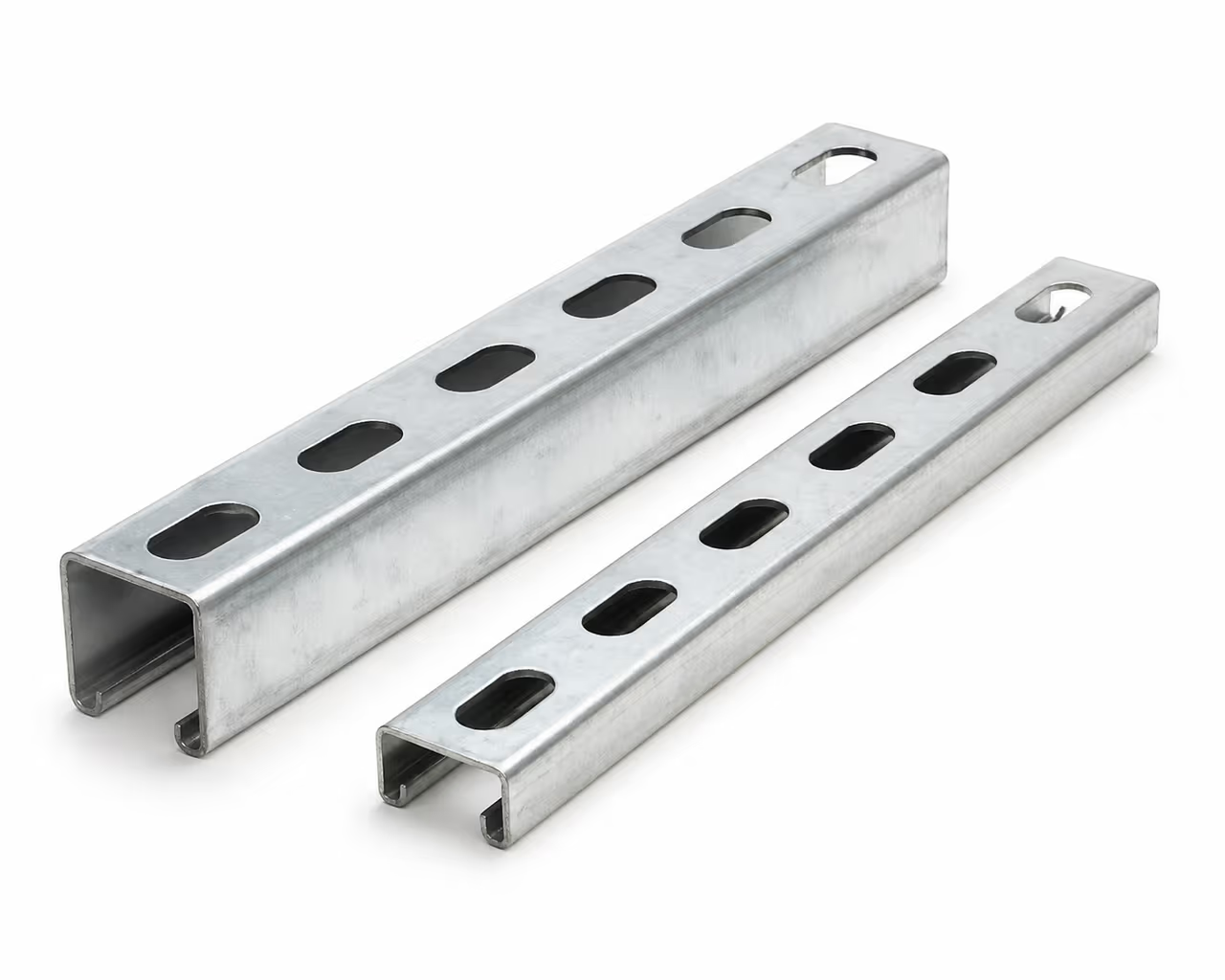
Strut channel is a cold-formed steel section with inturned lips. A channel nut sits inside the open face and grips the lips wherever it is tightened, so brackets, clamps and rod connections can be placed and moved without drilling. On site it is often called by one manufacturer’s brand name; the generic item is a 41 mm channel, and that is what the TEMBO TGSCH0 range supplies:
- Profiles — 41×21 and 41×41 mm, plus 62 mm and back-to-back combinations for heavier frames.
- Thickness — 1.5, 2.0 and 2.5 mm.
- Plain or slotted — slotted channel in 12/30 and 14/28 slot patterns, with custom slotting on request.
- Lengths — 2, 3 and 6 metre stock lengths.
- Material and finish — mild steel, pre-galvanised, electro-galvanised, hot-dip galvanised or zinc flake.
- Accessories — channel nuts, coupling nuts, washers, wall brackets and cantilever arms, so a complete rack ships against one order.
Choosing between 41×21 and 41×41, and between the three gauges, is a structural decision. The TEMBO datasheet publishes the moment of inertia and section modulus for each profile so the support designer can check the section against the services it carries. Plain channel suits bearers where every fixing position is known; slotted channel lets rod and bolts pass straight through the web, which suits trapeze bearers and wall framing where positions change.
A trapeze from structure to pipe
Every trapeze is the same stack of parts. Reading it from the top down is also the quickest way to check a BOQ for missing lines.
| Position | Component | Range we supply | MSS SP-58 type / note |
|---|---|---|---|
| Top fixing, steel | Beam clamp | Ductile iron TGBC00; steel, box, purlin and square-bolt patterns (TGCBC0, TGBBC0, TGPBC0, TGSBC0) — M10 / M12 rod | Types 19 and 23 |
| Top fixing, concrete | Concrete anchor | Drop-in TGDPA0 M8–M20; draw-in TGDWA0 M6–M16; wedge anchors to M20 | Anchor type and size from the support schedule |
| Drop | Full-thread rod and rod hardware | M6–M100, BS 3692 4.6–8.8, ASTM A193 B7 / B8 / B16, SS 304 / 316 | Types 13, 14 and 17 for turnbuckle, clevis and eye-nut connections |
| Rod to bearer | Hex nuts, washers, coupling nuts | To suit the rod, in the same grade and finish | Nut and washer above and below the channel at each rod |
| Bearer | Strut channel | 41×21 / 41×41, 1.5–2.5 mm, plain or slotted | Profile and gauge from the support schedule |
| Pipe to bearer | U-bolt, lined clamp or roller | EPDM-lined split clamps DN15–80; roller chairs DN50–750 | Type 24 U-bolt; Types 41–45 rollers |
| Insulated pipe | Protection saddle or shield | At each support on chilled and hot water | Types 39 and 40 |
| Wall-side support | Wall bracket or cantilever arm | Channel accessories in matching finish | Where the route runs along a wall or shaft face |
The bearer is held on each rod between a nut and washer above and a nut and washer below, so the level is set by running the nuts rather than by packing. The type numbers come from the same MSS SP-58 scheme covered in our pipe supports and hangers engineering guide, which lists the other patterns that turn up on Kuwait schedules.
Matching the attachment to the service
The bearer is common to every service; what holds each service to it is not. The choice depends on whether the line is insulated, whether it moves, what the pipe is made of, and whether it needs a listing.
Chilled water and insulated lines
An insulated line should not be clamped straight through its insulation. A pipe covering protection saddle or shield (Types 39 and 40) at each support spreads the bearing so the insulation is not crushed. On smaller lines, EPDM-lined split clamps (TGNC0L, DN15–80) put a moulded rubber lining rated −20 to +110 °C between the pipe and the steel. Their M10 rod boss takes a short length of rod into a channel nut on the bearer.
Lines that expand: rollers, guides and anchors
Long chilled water headers, LTHW, steam and condensate lines move along their axis. If the trapeze grips them, the movement drags the bearer or loads the rods sideways. The fix is a roller at each intermediate support and a fixed anchor where the design wants the pipe held, with guides keeping the line true between them. TEMBO roller supports are made to MSS SP-58 Types 41 to 45 in DN50–750, with iron rollers on mild-steel frames rated to 343 °C. The pattern follows the load path: the roller chair (TGPRC0) bolts to steel, such as a trapeze bearer or rack beam, where no vertical adjustment is needed; the adjustable roller hanger (TGARH0) hangs from rod where the pipe has to be levelled; the roller stand (TGPRS0) sits on structure below the pipe.
Domestic water, PPR, PEX and copper
Plastic and copper pipe should not bear on bare steel. The same lined split clamp protects the pipe surface and cuts transmitted noise by up to 18 dB, which is why acoustic consultants ask for lined clamps over bedrooms, wards and offices. The split design opens on an M6 side screw, so it can be fitted before or after the pipe is in place. Uninsulated steel lines can take a U-bolt (Type 24) straight through the channel slots.
Fire protection
Sprinkler pipework is reviewed against NFPA 13, which requires the hanger components to be listed. Fire mains therefore usually run on their own listed hardware: UL/FM sprinkler hangers (Type 10, DN20–200, M10 and M12 rod) or the UL listed and FM approved clevis (Type 1) above DN200. Where a sprinkler line is drawn onto a shared trapeze, confirm the arrangement with the fire engineer before detailing it.
Ductwork and cable tray
A duct trapeze is the same assembly: two rods, a strut bearer under the duct, and the duct resting on or strapped to the channel. Cable tray bolts across the bearer with channel nuts. The hardware is identical; the support arrangement for ductwork follows the ductwork specification and schedule, so send those with the pipe schedule when the trapeze is shared.
Beam clamps, anchors and threaded rod
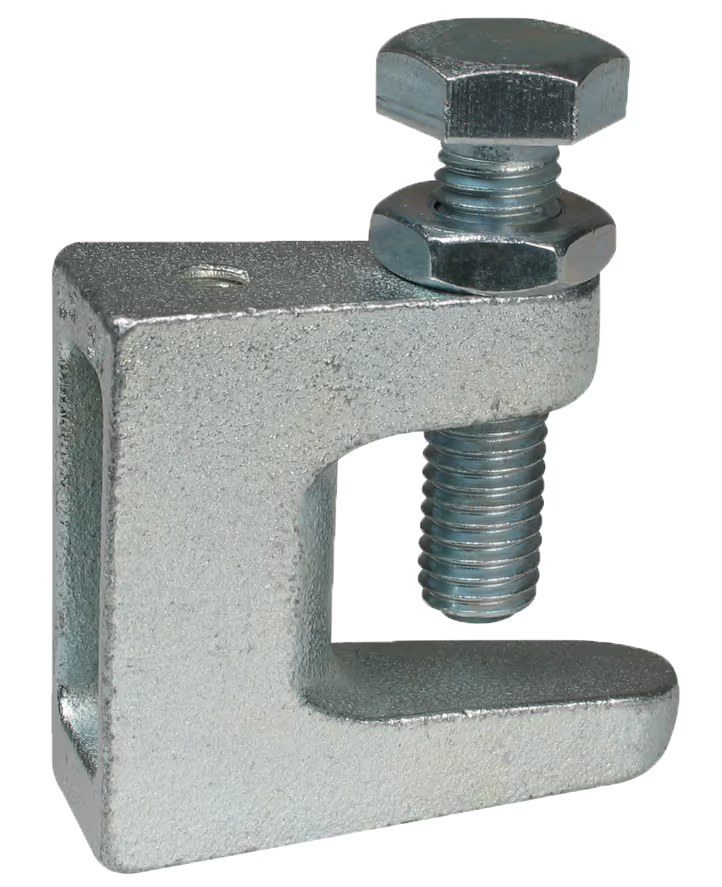
On steel, beam clamps grip the flange without welding or drilling, so the beam’s coating and fireproofing stay untouched. The ductile iron TGBC00 uses a hardened cup-point set screw with a lock nut and is available threaded or unthreaded for M10 and M12 (3/8″ and 1/2″) rod, with a 19 mm throat. The steel patterns (TGCBC0, TGBBC0) centre the rod under the flange and give up to 51 mm of vertical adjustment. Purlin clamps fit Z-purlin roofs, and square-bolt clamps suit NPI and NPH profiles. The pattern is chosen from the beam profile and flange dimensions, so those go on the enquiry.
On concrete, drop-in anchors (TGDPA0, M8–M20) give a flush fixing in the slab soffit for standard drops; draw-in anchors (TGDWA0, M6–M16) cover lighter drops and secondary fixings; wedge anchors are for higher tension at the slab. Which one a trapeze gets, and at what diameter, is set by the support designer against the slab and the load.
The rod is where under-specification shows up years later. TEMBO threaded rod is full-thread from M6 to M100 in UNC, UNF, metric coarse and metric fine threads, in grades from BS 3692 4.6 through 8.8 to ASTM A193 B7 and B8 and stainless 304 and 316. Nuts, coupling nuts, channel nuts and washers come in the matching grade and finish, and rod is cut to length against a BOQ take-off. Specify diameter and grade exactly as the schedule names them.
Risers and vertical shafts
In a riser shaft the load runs the other way. The pipe column bears down, and the supports have to hand that weight to the slab at each floor while letting the pipe move where the design allows.
- Riser clamps (Type 8) grip the pipe and bear on the slab at each floor, transferring the column load to structure.
- Strut framing spans the shaft or runs along its wall, with wall brackets and cantilever arms, so several risers, vertical ducts and cable trays can be fixed at one level.
- Lined split clamps on chilled water and domestic water risers keep flow and pump noise out of the floors; on towers this is often what the acoustic consultant is checking for.
- Anchors and guides fix the riser at the points the design chooses and keep it running true between them, so expansion goes to the loop or joint that was drawn for it rather than into the branches.
Finish selection for Kuwait sites
A trapeze is only as durable as its weakest component, so the finish is chosen per zone and applied to the whole assembly — channel, rod, nuts, clamps and fixings together.
| Environment | Strut channel | Rod, nuts and anchors | Hangers, clamps and rollers |
|---|---|---|---|
| Dry indoor: ceiling voids, plant rooms, risers and shafts | Pre-galvanised or electro-galvanised | Electro-galvanised | Electro-galvanised; the UL/FM clevis and sprinkler hangers are supplied in this finish |
| Chilled water routes and zones with condensation | Hot-dip galvanised | Hot-dip galvanised | Hot-dip galvanised, with saddles or lined clamps at the pipe |
| External: rooftop plant, car parks, pipe racks away from the coast | Hot-dip galvanised | Hot-dip galvanised | Hot-dip galvanised |
| Direct coastal exposure or chloride attack | Galvanised and zinc flake are the listed finishes; raise any stainless channel requirement at enquiry | SS 304 / 316 grades | SS 316 / 316L on request |
| Specification names a coating or colour | Zinc flake | Zinc flake | Zinc flake; epoxy coated on clevis hangers, sprinkler hangers and lined clamps |
Mixing finishes across a project is normal; mixing them inside one assembly is where trouble starts. The finish table on the pipe hangers and supports page uses the same zones, so the submittal can reference one scheme throughout.
Loads, spans and spacing: where they come from
We do not publish load ratings, bearer spans, rod load tables or support spacing. Channel profile and gauge, bearer length, rod diameter and grade, anchor type and the spacing between trapezes all come from the project’s engineered support schedule and the manufacturer’s datasheet. The designer works from every service on each bearer and the structure each rod fixes to.
We quote exactly what the approved schedule names, supply the TEMBO datasheets for the submittal, and flag any line where the schedule does not give us enough to select a product.
What to send for a quotation
A trapeze enquiry can be priced line by line once we have these. With them, a priced offer comes back within 24–48 hours.
| Send | Why we need it |
|---|---|
| Support schedule, BOQ or drawing take-off | Each line is priced against its support type and MSS SP-58 type number |
| Services on each trapeze, pipe sizes and insulation | Sets the clamp, saddle, U-bolt or roller for every pipe on the bearer |
| Structure at each drop: beam profile and flange size, or concrete soffit | Decides the beam clamp pattern or the anchor type |
| Channel profile, gauge, plain or slotted, and bearer lengths | Matched to 2, 3 or 6 m stock lengths and the slot pattern |
| Rod diameter, grade and drop lengths | Rod is cut to length against the take-off in the specified grade |
| Finish for each zone | Applied across channel, rod, nuts, clamps and fixings |
| UL/FM requirement on fire scopes | Listed variants are quoted and certificates supplied for the submittal |
| Delivery area in Kuwait | Delivery planning against the programme |
Send the schedule through the contact page. The full range, with every support type and fixing, is on the pipe supports page.
Frequently asked questions
What is a trapeze hanger?
A trapeze hanger is a horizontal bearer, usually strut channel, hung from two threaded rods, with several pipes, a duct or a cable tray fixed to it. It replaces a row of single hangers with two drops, keeps the services at one elevation, and lets more services be bolted on later with channel nuts.
What strut channel sizes do you supply in Kuwait?
TEMBO strut channel in 41×21 and 41×41 mm profiles, plus 62 mm and back-to-back variants, in 1.5, 2.0 and 2.5 mm thickness, plain or slotted with 12/30 and 14/28 slot patterns, in 2, 3 and 6 metre lengths. Channel nuts, coupling nuts, washers, wall brackets and cantilever arms are supplied with it.
Should a trapeze be fixed with beam clamps or concrete anchors?
It depends on the structure. On steel beams and purlins, beam clamps (MSS SP-58 Types 19 and 23, M10 and M12 rod) grip the flange without welding or drilling. On concrete soffits, drop-in anchors (M8 to M20) suit standard drops and wedge anchors take higher tension. The support schedule sets the type and size.
How much load can a strut trapeze carry, and how far apart should trapezes be?
Take both from the project’s engineered support schedule and the manufacturer’s datasheet. The answer depends on the channel profile and gauge, the bearer length, the rod and anchors, and every service on the bearer. The TEMBO datasheet publishes section properties for each profile for the support designer.
How are pipes supported in a vertical riser shaft?
Riser clamps (MSS SP-58 Type 8) carry the pipe column onto the slab at each floor. Strut framing with wall brackets and cantilever arms carries several risers, ducts and cable trays at one level. Lined split clamps keep chilled and domestic water risers quiet. Anchors and guides control where the riser moves.
Which finish should I specify for strut and threaded rod in Kuwait?
Pre-galvanised or electro-galvanised for dry ceiling voids, plant rooms and shafts. Hot-dip galvanised for chilled water routes with condensation, rooftops, car parks and external racks. Stainless steel 316 rod, nuts and hangers for direct coastal exposure. Use the same finish across the whole assembly.
Send the support schedule, the services on each trapeze, the structure at each drop, and the finish for each zone. The technical desk returns a priced selection within 24–48 hours.
Also useful:Strut channels & bracketsBeam clamps (Types 19 & 23)Threaded rod & anchors