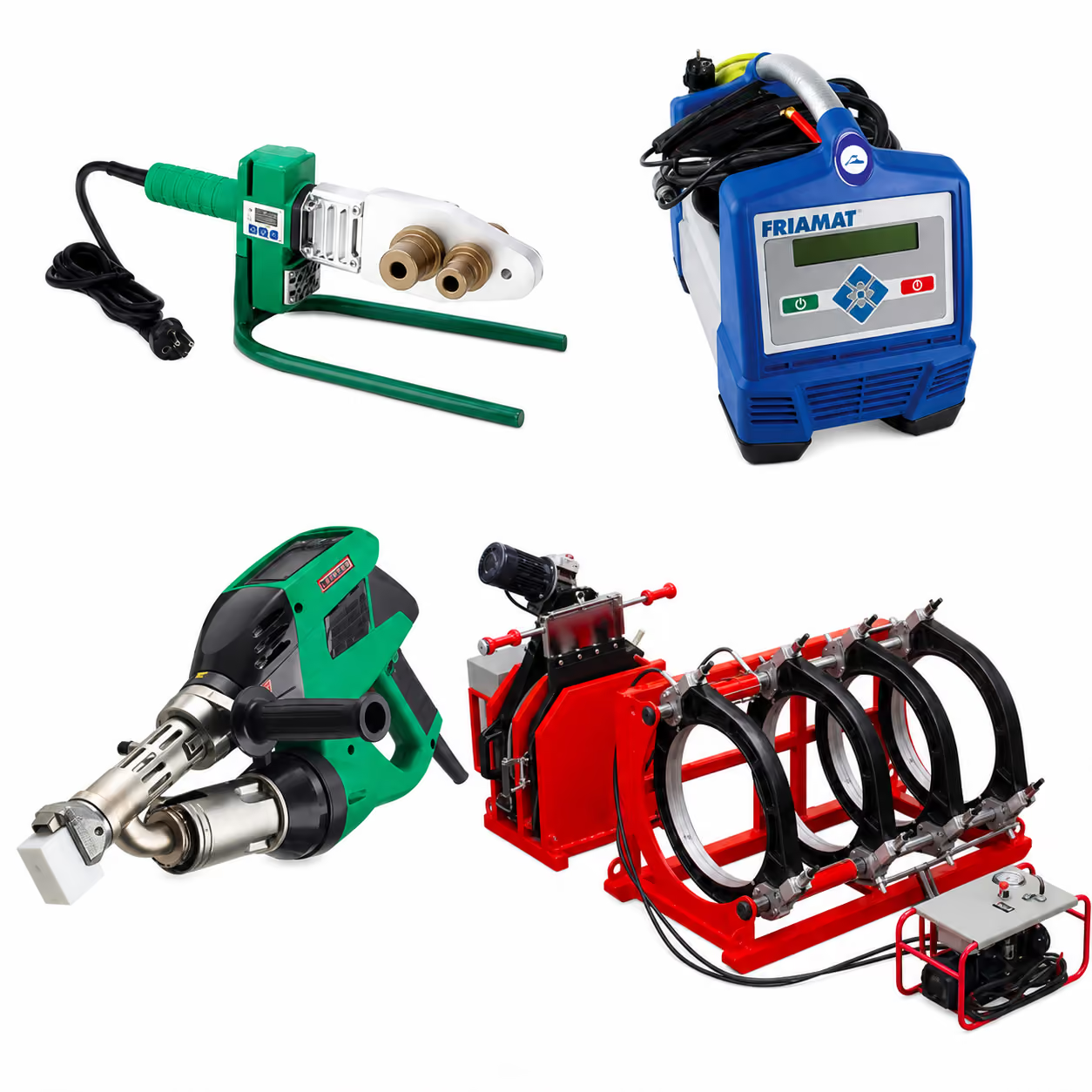
Search for the ‘best’ pipe welding machine and you will find brand comparisons. That is the wrong starting point. Plastic pipe welding machines are not interchangeable tools with better and worse models — they are four different fusion processes, and each one belongs to a specific pipe material, size range, and type of joint. Choose the right process first; the model follows. This is a working buyer’s guide for contractors and procurement teams choosing PPR and HDPE welding equipment for building-services and pipeline work in Kuwait.
Start with the pipe, not the machine
Every fusion process does the same fundamental thing: it melts two thermoplastic surfaces and presses them together so the polymer re-crystallises as one continuous material. What changes between processes is where the heat goes in, what gets consumed at the joint, and how the cycle is controlled and recorded. That is why the pipe on your drawings decides the machine, not the other way round.
| Your scope | Process | Machine to buy |
|---|---|---|
| PPR hot & cold water, 20–63 mm | Socket fusion | PPR socket fusion machine with die set |
| PPR risers and headers, 75–160 mm | Socket fusion (bench) | Bench-mounted socket fusion machine |
| HDPE mains and long straight runs, ≥ 110 mm | Butt fusion | Hydraulic butt fusion machine |
| HDPE fittings, branches, tie-ins, repairs | Electrofusion | Barcode electrofusion control unit |
| Repairs, fabrication, sheet and tank work | Extrusion welding | Handheld extrusion welder |
Two consequences fall straight out of that table. First, a PPR plumbing contractor and an HDPE pipeline contractor are not shopping for the same machine, even though both say ‘pipe welding machine’. Second, most HDPE projects need two machines — butt fusion for the mainline and electrofusion for everything else. We covered when each HDPE joint belongs on a project in our butt fusion vs electrofusion comparison; this guide covers the equipment itself.
PPR socket fusion machines
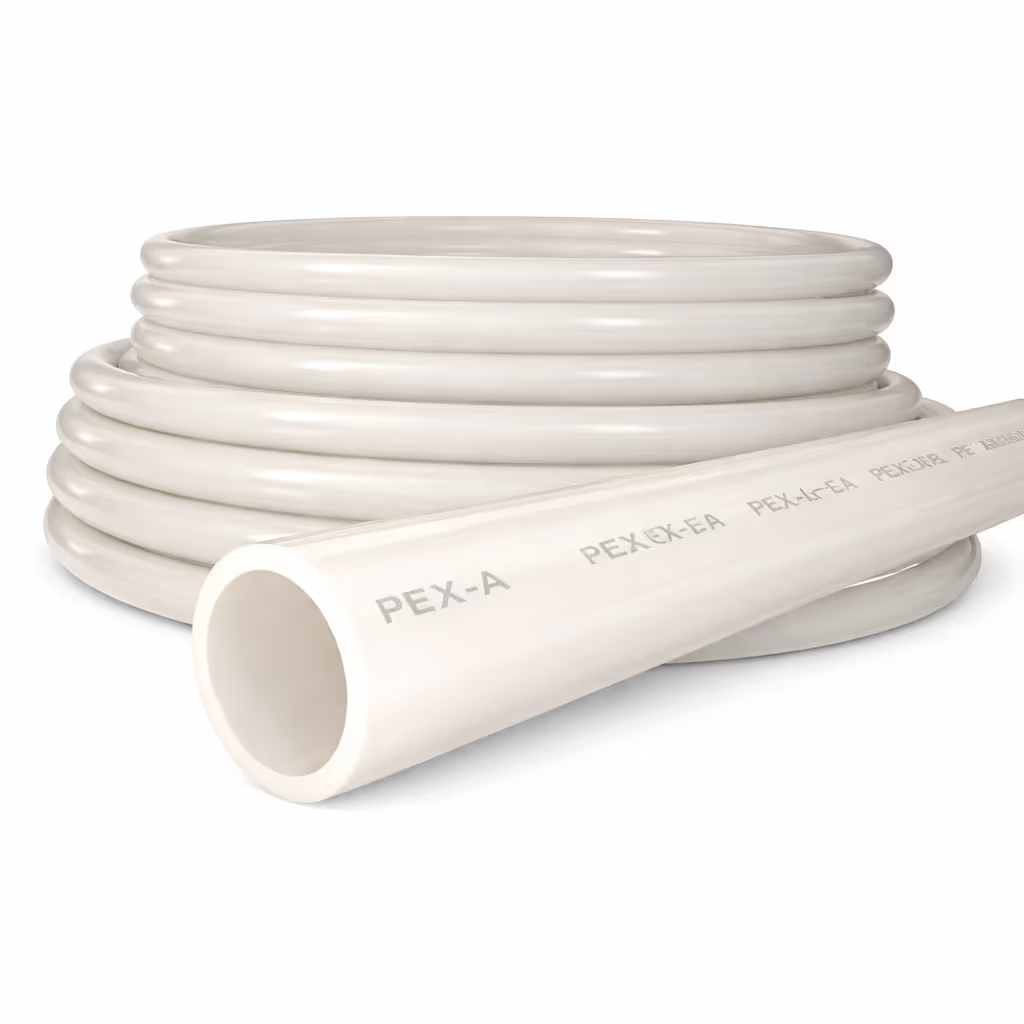
Socket fusion is the workhorse of building-services plumbing. The machine is a thermostat-controlled heating plate carrying paired male and female dies: the die heats the pipe outside surface and the fitting inside surface at 260 °C, both parts are pushed together by hand (or on a bench rig for larger sizes), and the joint cools into a single homogeneous socket weld.

What separates a professional unit from a cheap one
- Thermostat accuracy. PPR is forgiving, but only inside its temperature window. A plate that drifts overheats the material, glazes the surface, and produces a joint that passes a visual check and fails in service. Look for a thermostat-controlled plate that holds its setpoint, not just an on/off indicator light.
- Die quality and coverage. Dies should be PTFE-coated, machined — not cast — and cover the full size range you install. The common site kit covers 20–63 mm; risers and headers above 75 mm need a bench-mounted machine with clamping and alignment built in.
- Recovery time. On a production day a crew welds a joint every few minutes. A low-mass plate that loses temperature after each joint slows the whole crew down. Plate wattage matters less than how fast the plate recovers its setpoint.
- The stand and the case. Unglamorous, but the bench stand is what keeps the hot plate stable and square on scaffolding, and the case is what keeps sand off the dies between joints.
HDPE butt fusion machines
Butt fusion welds two HDPE pipe ends directly to each other — no fitting consumed at the joint. The machine clamps and aligns both ends, faces them square with a rotating planer, heats them against a flat plate at 210 °C, and presses them together under controlled force until the weld cools. The cycle parameters — temperature, soak time, fusion pressure, cooling time — are set by ISO 21307 for each pipe size and SDR class.

Manual, hydraulic, or CNC
- Manual machines suit small diameters and low joint counts. The operator applies and judges the fusion force, so the joint quality is only as good as the operator. Acceptable for 20–160 mm yard and irrigation work; risky as the spec tightens.
- Hydraulic machines are the project standard from roughly 110 mm up. Fusion force comes from a gauge-controlled hydraulic circuit, which removes the operator’s arm from the equation and makes the cycle repeatable against the standard.
- CNC / data-logged machines run the whole cycle from the pipe parameters and write a per-joint weld log — size, SDR, ambient temperature, set versus actual parameters, operator ID. On consultant-reviewed Kuwait projects, that log is what clears the submittal. If your scope has a QA file, buy the logging machine.
Size the machine to the largest pipe on the drawings, then check the whole clamping range. A machine is named for its maximum diameter, but the inserts decide its minimum — a 315 rig that cannot clamp the 110 mm spur line means a second mobilisation. Machines are available across DN 20 to DN 800; the working envelope for most Kuwait utility scopes sits between 110 and 315 mm.
HDPE electrofusion machines
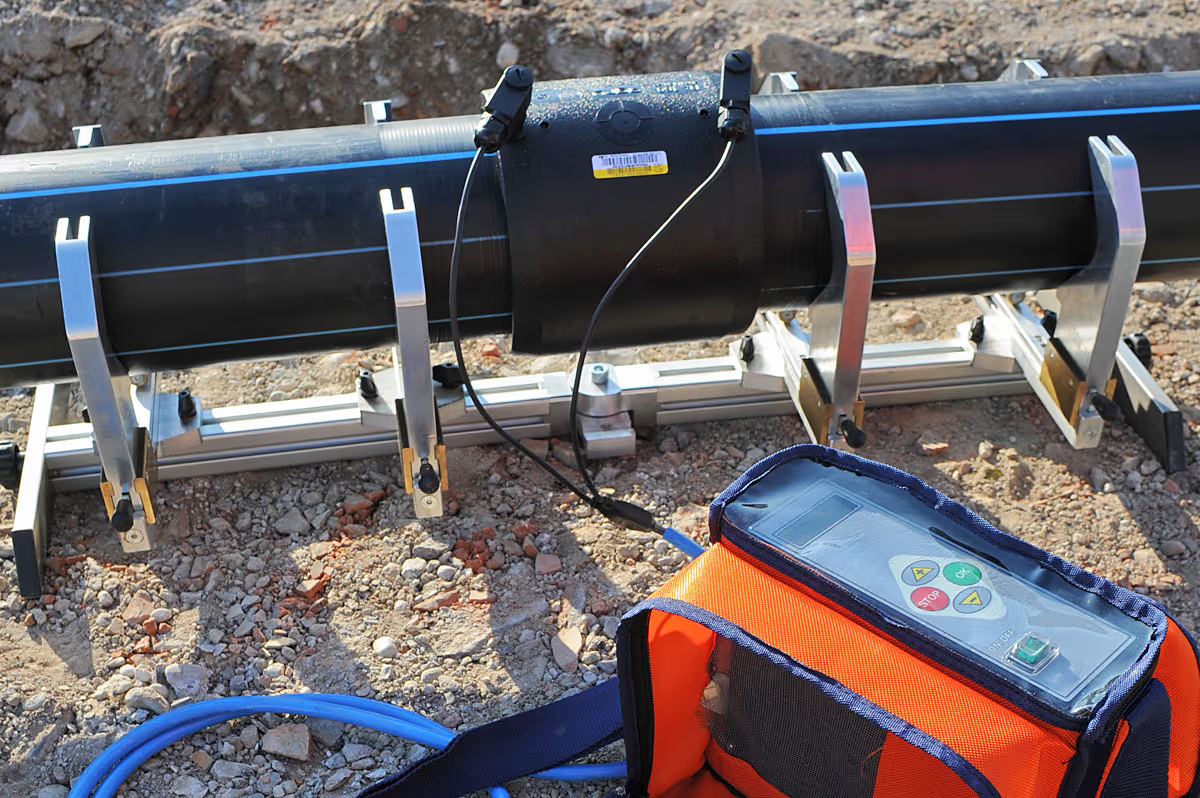
Electrofusion moves the heat source into the fitting: a resistance wire moulded into the fitting socket fuses it to the pipe when the control unit drives the correct current through it. The machine you are buying is therefore not a welder in the mechanical sense — it is a control unit that reads the fitting’s barcode, runs the voltage-time cycle, and records the result.

What to check before buying
- Universal barcode reading. The unit should weld any fitting carrying a standard ISO-type barcode, not just one manufacturer’s range. Equipment compatibility is governed by ISO 12176-2.
- Traceability and export. A proper unit logs every joint — fitting ID, pipe details, actual current and voltage profile, ambient, operator — and exports the history by USB for the submittal pack. On gas and consultant-reviewed water work this is mandatory in practice.
- Input voltage tolerance. The unit lives on generator power. A control unit that aborts the cycle on a voltage dip will fail joints all day on a badly regulated generator — see the Kuwait conditions section below.
- The accessories are not optional. Pipe scrapers (a peeler tool, never a knife), alignment clamps, and re-rounding clamps decide joint quality as much as the unit itself. Budget for the full kit.
The two control units that cover most of our Kuwait scope are the FRIATEC FRIAMAT Prime Eco and the ELOFIT Elektra — both barcode-driven, both logging per-joint data with the fitting’s unique ID. They pair with the electrofusion fitting range we hold in stock, which keeps machine, fittings, and weld-log format consistent on one project.
Extrusion welders and hot plates
Two more tools round out a working fusion fleet. A handheld extrusion welder feeds polyethylene welding rod through a heated barrel and lays a controlled molten bead — the tool for tank and sheet fabrication, fabricated fittings, and repairs where neither butt fusion nor electrofusion fits the geometry. A spare PTFE-coated hot plate with thermostat control is the cheapest insurance on a butt fusion fleet: plate surface condition is the most common cause of contaminated joints, and a scored or worn plate has no field repair.

The specs that actually matter
Brochures lead with wattage and weight. The specifications that decide whether the machine earns its keep on site are these:
| Spec | Why it matters |
|---|---|
| Size envelope, top and bottom | The machine must clamp the smallest pipe on the drawings as well as the largest — check the insert range, not the headline size. |
| Temperature control | Thermostat-held setpoint with visible actual temperature. Drifting plates make joints that fail late, not early. |
| Cycle logging | Per-joint records exported by USB are what consultant submittals run on. A machine without logs pushes that burden onto paperwork. |
| Standards conformity | ISO 21307 cycle capability for butt fusion; ISO 12176-1/-2 conformity for equipment; operators certified to EN 13067 or equivalent. |
| Power demand | Match the generator before the machine arrives — heater plates and hydraulic packs size the genset, and unstable power fails welds. |
| Spares and service path | Heater plates, clamping inserts, scraper blades, and calibration are consumables. A machine without a local service path becomes scrap at its first fault. |
A pipe welding machine is bought once and inspected on every joint it ever makes. Buy for the weld log and the spare parts shelf, not the price tag.
Five buying mistakes that cost money
- Buying one machine for a two-process project. An HDPE network with branches and tie-ins needs electrofusion alongside the butt fusion rig. Discovering that mid-project means renting at a premium or re-sequencing the work.
- Sizing to the pipe you usually weld, not the project envelope.The one 250 mm header on an otherwise 63 mm job decides the machine.
- Ignoring the QA requirement until the first submittal. If the consultant wants weld logs and the machine does not produce them, the machine is the wrong machine regardless of how well it welds.
- Treating accessories as optional extras. Peeler tools, alignment clamps, die sets, and spare heater plates are part of the machine price. A control unit without a scraper produces contaminated joints with perfect cycle logs.
- Buying without a service path. Calibration, heater plate replacement, and repair turnaround decide the machine’s working life. Ask where the machine goes when it faults, and how long it is gone.
Buying for Kuwait site conditions
Three local realities should shape the purchase more than any catalogue page:
1. Summer ambient temperature
At 45–50 °C ambient, fusion cycle maths changes: cooling times stretch, the working window after heater withdrawal shrinks, and a plate standing in direct sun starts the cycle off its setpoint. Machines with ambient compensation in the controller — standard on data-logged butt fusion rigs and barcode electrofusion units — handle this; fully manual equipment leans entirely on operator judgement, in the season when judgement is hardest.
2. Sand and dust
Contamination is the leading cause of failed plastic welds in the region. That buys real weight for sealed carry cases, PTFE plate coatings in good condition, covered die storage, and the discipline of facing and scraping immediately before fusion. When comparing two machines, look at how the heater plate and dies are protected between joints — that detail predicts joint quality here better than wattage ever will.
3. Generator power
Most fusion welding in Kuwait runs on site generators. Electrofusion control units typically want a stable 3.5–5 kVA supply with decent voltage regulation; hydraulic butt fusion machines demand more, rising with plate diameter. An undersized or poorly regulated generator shows up as aborted cycles and rejected joints that look like machine faults. Size the genset with the machine, as one purchase decision.
Frequently asked questions
Which welding machine do I need for PPR pipe?
A socket fusion machine. PPR hot and cold water pipework in the common 20–63 mm sizes is joined by socket fusion at 260 °C with paired PTFE-coated dies. Choose a thermostat-controlled plate, dies covering your full size range, and a bench machine for anything above 75 mm. See the welding machines page for the working range we stock.
What is the best welding machine for HDPE pipe?
It depends on the joint, not the brand. Long straight runs from roughly 110 mm up are most economical with a butt fusion machine; fittings, branches, tie-ins, and repairs are electrofusion territory. Most HDPE projects need both. Our butt fusion vs electrofusion guide walks through which joints belong to which method.
Can one machine weld both PPR and HDPE pipe?
Not in practice. PPR is socket fusion; HDPE is butt fusion or electrofusion. The processes, temperatures, and tooling differ, and mixed-material kits compromise both. Crews that install both materials carry both machines.
What size generator does a welding machine need on site?
Electrofusion control units typically need a stable 3.5–5 kVA generator with good voltage regulation. Hydraulic butt fusion machines need more, rising with pipe size. Unstable generator power is one of the most common causes of failed welds on site — size the genset with the machine.
Do you supply pipe welding machines in Kuwait?
Yes. We stock HDPE butt fusion machines across the DN 20–800 envelope, FRIATEC FRIAMAT and ELOFIT Elektra electrofusion units, PPR socket fusion machines with die sets, extrusion welders, and PTFE hot plates — with commissioning and on-site operator training available. The matching HDPE pipes, butt fusion fittings, and electrofusion fittings come from the same stock, so machine and consumables stay compatible.
How do I get a priced offer for a machine package?
Send the pipe sizes, SDR classes, daily joint target, and QA requirements through the contact page and the technical desk will return a machine package with the accessories, generator sizing, and training plan matched to the scope.
Tell us the pipe material, the diameter range on the drawings, and the power available on site. We come back with the machine, dies, and consumables — with commissioning and operator training available in Kuwait.
Also useful:HDPE pipes & fittingsElectrofusion fittingsButt fusion fittings