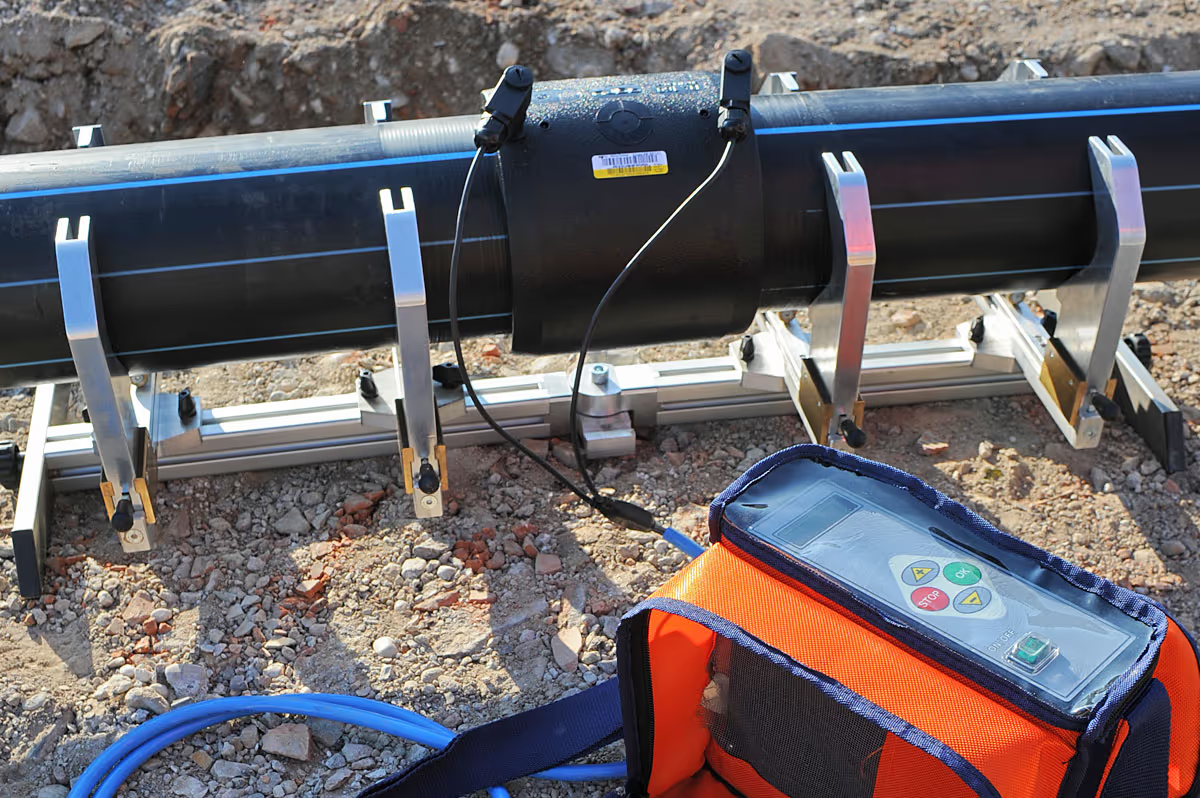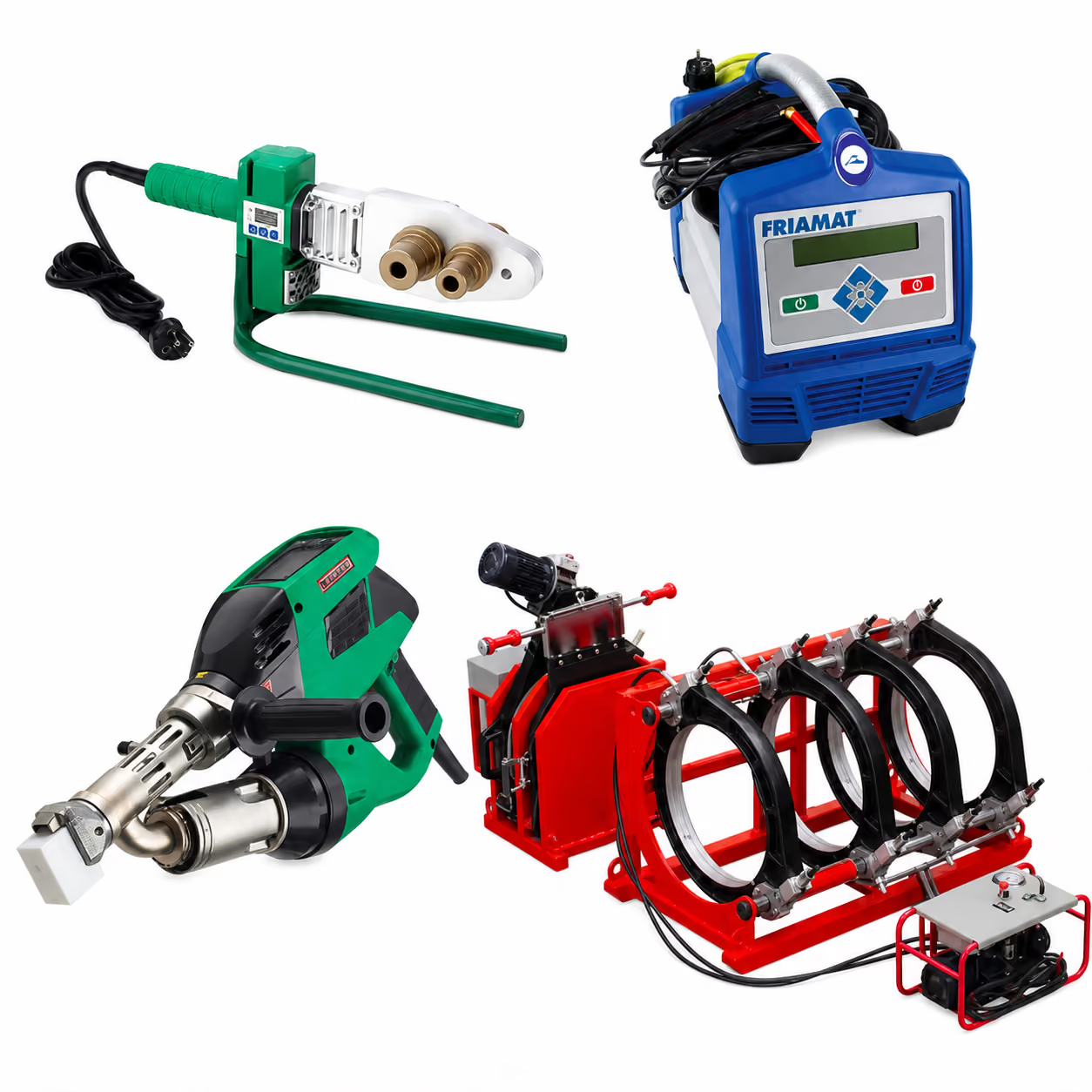
Every HDPE pipe enquiry eventually lands on the same three questions: what size, what SDR, and what does it cost per metre? The three are one question — the SDR fixes the wall thickness, the wall thickness fixes the pressure rating and the weight, and the weight is most of the price. This guide puts the full PE100 chart in one place and explains how to read it, so a Kuwait project team can go from drawing to priced enquiry without a single ambiguous line item.
What SDR actually means
SDR — Standard Dimension Ratio — is the outside diameter of the pipe divided by its wall thickness:
SDR = OD ÷ wall thickness
A 110 mm SDR 11 pipe has a wall of 110 ÷ 11 = 10.0 mm. A 110 mm SDR 17 pipe has a wall of roughly 6.6 mm. Same outside diameter, very different pipe: the SDR 11 wall is thicker, so it holds more pressure, weighs more, and costs more per metre.
Two things follow from the definition that save a lot of confusion on site:
- Lower SDR = thicker wall = higher pressure rating. The scale runs backwards from what many people expect. SDR 11 is a stronger pipe than SDR 17.
- HDPE is sized by outside diameter, not inside. A ‘110 mm’ HDPE pipe is 110 mm across the outside. The bore shrinks as the SDR drops — a 110 SDR 11 pipe has an inside diameter of about 90 mm. Hydraulic calculations and pump selections must use the real bore, not the nominal size.
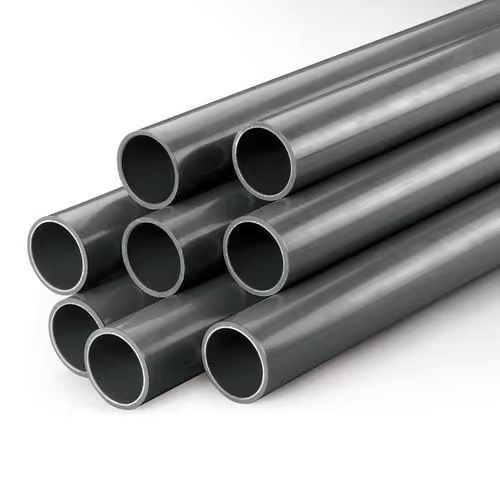
SDR to pressure rating — the PE100 chart
For PE100 material carrying water at 20 °C with the standard design coefficient (C = 1.25, per ISO 4427 / EN 12201), each SDR class maps to a nominal pressure rating — the PN number, in bar:
| SDR class | Pressure rating (PE100, water, 20 °C) | Typical use |
|---|---|---|
| SDR 41 | PN 4 | Gravity drains, ducting, casings |
| SDR 33 | PN 5 | Low-pressure drainage, cable duct |
| SDR 26 | PN 6.3 | Gravity sewage, irrigation laterals |
| SDR 21 | PN 8 | Low-pressure distribution |
| SDR 17 | PN 10 | Transmission mains, TSE / irrigation networks |
| SDR 13.6 | PN 12.5 | Distribution with surge allowance |
| SDR 11 | PN 16 | Potable water distribution, compressed air, plant piping |
| SDR 9 | PN 20 | High-pressure process lines |
| SDR 7.4 | PN 25 | Special high-pressure duties |
The relationship behind the table is a single formula: the pressure rating equals 2 × MRS ÷ (C × (SDR − 1)), where MRS is the Minimum Required Strength of the material — 10 MPa for PE100, 8 MPa for the older PE80. That is why the same SDR 11 pipe is PN 16 in PE100 but only PN 12.5 in PE80, and why specifying both the SDR and the PN on a drawing removes any doubt about the material grade being asked for.
One caution: gas networks to ISO 4437 use a higher design coefficient (C = 2 or more), so the same SDR 11 pipe carries a much lower allowable operating pressure on gas than the PN 16 water rating. Never transfer PN numbers from a water chart to a gas scope.
Size & wall thickness chart, 32–630 mm
HDPE pressure pipe to ISO 4427 comes in a fixed ladder of outside diameters. The two classes below cover the vast majority of Kuwait water and utility work — SDR 17 (PN 10) and SDR 11 (PN 16). Wall thicknesses are the standard minimums in millimetres:
| OD (mm) | SDR 17 / PN 10 wall (mm) | SDR 11 / PN 16 wall (mm) | Approx. bore at SDR 11 (mm) |
|---|---|---|---|
| 32 | 2.0 | 3.0 | 26 |
| 63 | 3.8 | 5.8 | 51 |
| 90 | 5.4 | 8.2 | 73 |
| 110 | 6.6 | 10.0 | 90 |
| 160 | 9.5 | 14.6 | 130 |
| 200 | 11.9 | 18.2 | 163 |
| 250 | 14.8 | 22.7 | 204 |
| 315 | 18.7 | 28.6 | 257 |
| 400 | 23.7 | 36.3 | 327 |
| 500 | 29.7 | 45.4 | 409 |
| 630 | 37.4 | 57.2 | 515 |
Sizes below 110 mm are typically supplied in coils of 50 or 100 metres; 110 mm and above come as 12-metre sticks welded on site by butt fusion or joined with electrofusion fittings. The full ladder runs 20 through 630 mm in the classes above — our HDPE pipes and fittings in Kuwait page lists the working stock range, and intermediate sizes (75, 125, 140, 180, 225, 280, 355, 450, 560 mm) are available on order.
Choosing the SDR for the application
The chart tells you what each class can hold; the application tells you which class to buy. The patterns that repeat on Kuwait scopes:
- Potable water distribution — SDR 11 / PN 16. Municipal and compound networks in Kuwait are overwhelmingly specified PN 16, which leaves headroom for pump surge on top of static pressure.
- Transmission and TSE / irrigation mains — SDR 17 / PN 10.Longer runs at moderate pressure, where the thinner wall saves real money per kilometre.
- Compressed air and plant piping — SDR 11 minimum. Surge and temperature both eat into the rating; the thicker class is the safe default.
- Gravity sewage, drainage, and ducting — SDR 26 to SDR 41.Where the line never sees pressure, the rating is irrelevant and stiffness governs; the thin classes keep the cost down.
- Pump rising mains — check the surge, not just the duty point. Water hammer on a poorly cushioned rising main can double the working pressure. This is the classic reason an SDR 17 line that ‘should’ have been fine ends up replaced in SDR 11.
Whatever the class, the jointing method question follows immediately — butt fusion for the straight runs, electrofusion for branches, tie-ins, and constrained access. That decision has its own guide: butt fusion vs electrofusion for HDPE joints.
Kuwait heat and temperature derating
Every PN number on this page is a 20 °C rating. HDPE loses allowable pressure as the service temperature rises — roughly a factor of 0.87 at 30 °C and 0.74 at 40 °C on the standard derating tables. In Kuwait that matters in three specific places:
- Shallow buried lines. A metre of cover keeps soil temperature far below summer air temperature, which is why properly buried mains keep most of their rating. Lines laid at minimal depth under paving do not.
- Above-ground and rooftop runs. Surface temperature on black pipe in direct Kuwait sun goes far beyond ambient. Above-ground pressure lines need shading or lagging, and the derated pressure checked against the duty — often the answer is one class heavier than the 20 °C chart suggests.
- TSE and process water arriving warm. Treated effluent and cooling returns can run 30–40 °C year-round. The derating applies to the fluid temperature, not the weather.
Rule of thumb for Kuwait: if any part of the line runs hot — from the sun or from the fluid — check the derated rating before you fix the SDR. Moving one class heavier at enquiry stage costs far less than re-laying pipe.
What decides HDPE pipe price per meter
HDPE pipe is priced by weight, and the chart above is really a weight table in disguise. The mass per metre rises with the square of the diameter and inversely with the SDR — a 200 mm SDR 11 stick weighs roughly 10 kg per metre, while its SDR 17 sibling weighs about 7. Same OD, around a third apart in material, and the per-metre price tracks that gap closely. The practical drivers, in order:
- Diameter and SDR — together they fix the kilograms of PE100 resin per metre, which is most of the cost.
- Resin grade and certification — PE100 with potable water certification to ISO 4427, PE100-RC for trenchless or recycled-bed installs, and gas-grade PE to ISO 4437 each price differently.
- Supply form — coils in the small sizes, 12-metre sticks from 110 mm up. Coils save fittings and welding time on long small-bore runs, which matters more to installed cost than the pipe price itself.
- Quantity and delivery — full-truck quantities to a Kuwait site price differently from a part-load pickup.
This is why a serious supplier quotes against a size list rather than publishing a single price per metre — two enquiries for ‘200 mm HDPE pipe’ can differ by a third depending on the class. Send the sizes, SDRs, and quantities through the contact page and the technical desk returns a line-priced offer within 24–48 hours.
How to spec an enquiry that prices in one round
The enquiries that come back priced fastest — and survive consultant review without revision — carry five things per line item:
- Outside diameter in millimetres (not inches, not inside diameter — the metric OD is the catalogue key).
- SDR and PN together, so the material grade is unambiguous (e.g. ‘SDR 11 PN 16 PE100’).
- The governing standard — ISO 4427 for water, ISO 4437 for gas, or the project specification reference.
- Total length and supply form — metres required, coils or sticks.
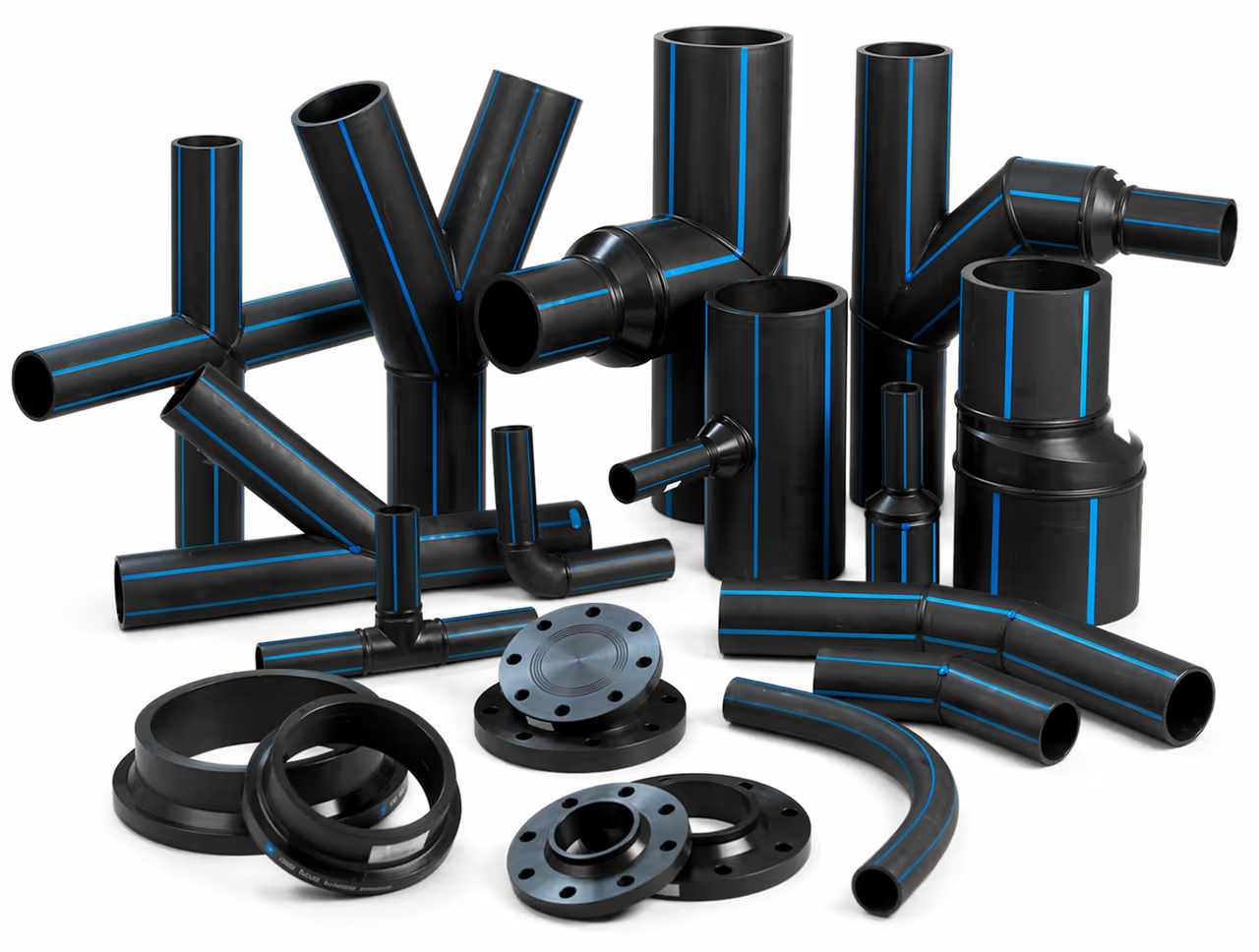
- The fittings and jointing scope — electrofusion couplers, elbows, and tees from the electrofusion range, sweep bends and reducers from the butt fusion range, or engineered specials from the custom fabricated fittings scope — plus welding equipment if the site needs machines.
Frequently asked questions
What does SDR mean on HDPE pipe?
SDR is the Standard Dimension Ratio — the outside diameter divided by the wall thickness. A lower SDR means a thicker wall and a higher pressure rating: SDR 11 PE100 pipe is rated PN 16, while SDR 17 is rated PN 10.
Which SDR is PN 16?
For PE100 material carrying water at 20 °C, SDR 11 corresponds to PN 16. In the older PE80 material the same SDR 11 wall only achieves PN 12.5, which is why drawings should state material grade, SDR, and PN together.
How much does HDPE pipe cost per metre in Kuwait?
It depends on diameter and SDR class, because HDPE is priced by resin weight per metre — a 200 mm SDR 11 pipe carries roughly a third more material than the same size in SDR 17. Send the size list with SDR or PN class through the contact page and Combined Cooperation returns a line-priced offer within 24–48 hours.
What HDPE pipe sizes are available in Kuwait?
The standard ISO 4427 ladder from 20 mm to 630 mm outside diameter, with sizes below 110 mm supplied in coils and 110 mm and above in 12-metre sticks. Common classes are SDR 17 / PN 10 and SDR 11 / PN 16, with other classes available on order.
Does Kuwait’s heat reduce the pressure rating?
Yes. PN ratings are set at 20 °C and derate as service temperature rises — to roughly 87% at 30 °C and 74% at 40 °C. Properly buried lines stay close to their full rating; above-ground, rooftop, and warm-fluid lines should be checked and often specified one class heavier.
Is PE100 better than PE80?
PE100 has a higher Minimum Required Strength (10 MPa vs 8 MPa), so it achieves a higher pressure rating from the same wall thickness — or the same rating from a lighter, cheaper pipe. New pressure work in Kuwait is specified in PE100 as standard; PE80 survives mainly in legacy networks and some gas applications.
Send the size schedule with the SDR or PN class against each line and the technical desk returns a line-priced offer, with fittings and fusion equipment matched to the same specification.
Also useful:Electrofusion fittingsButt fusion fittingsCustom fabricated fittings