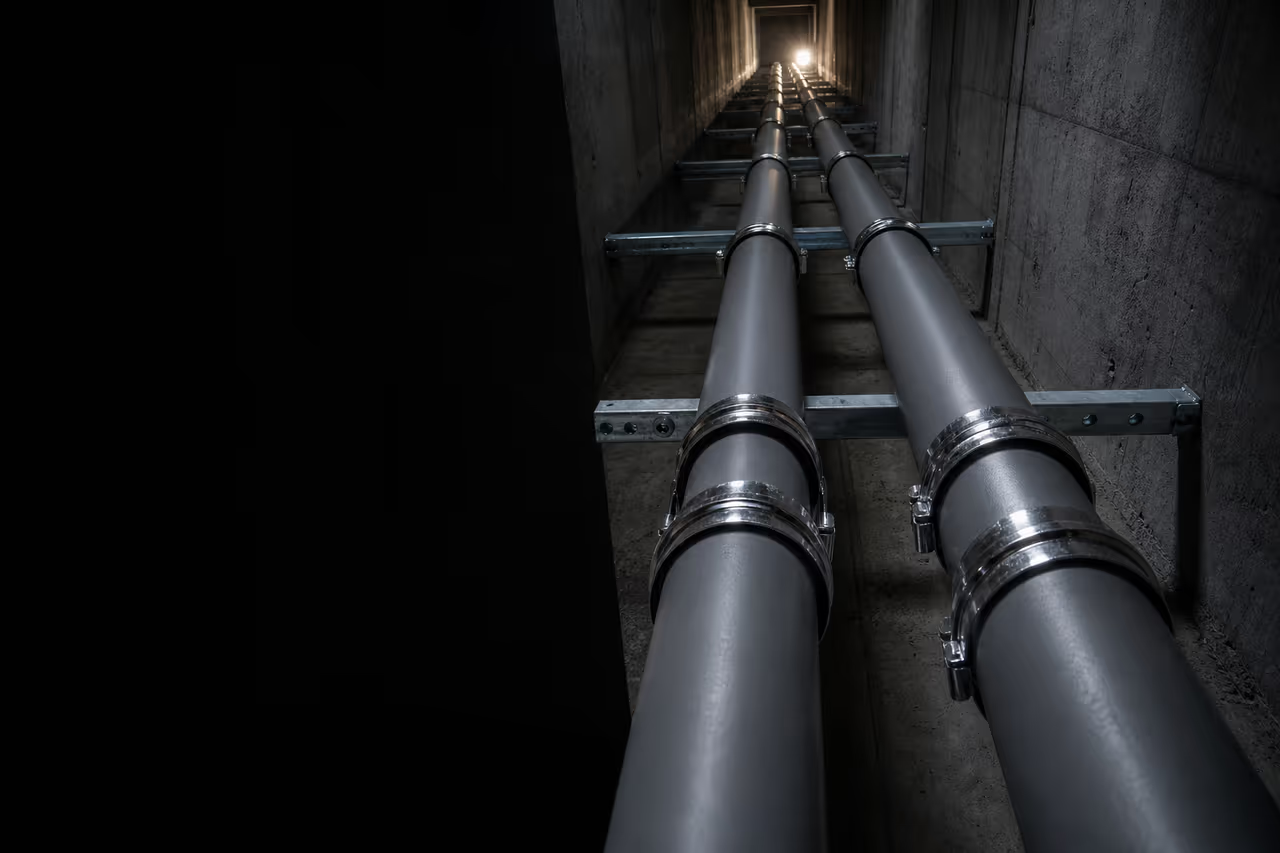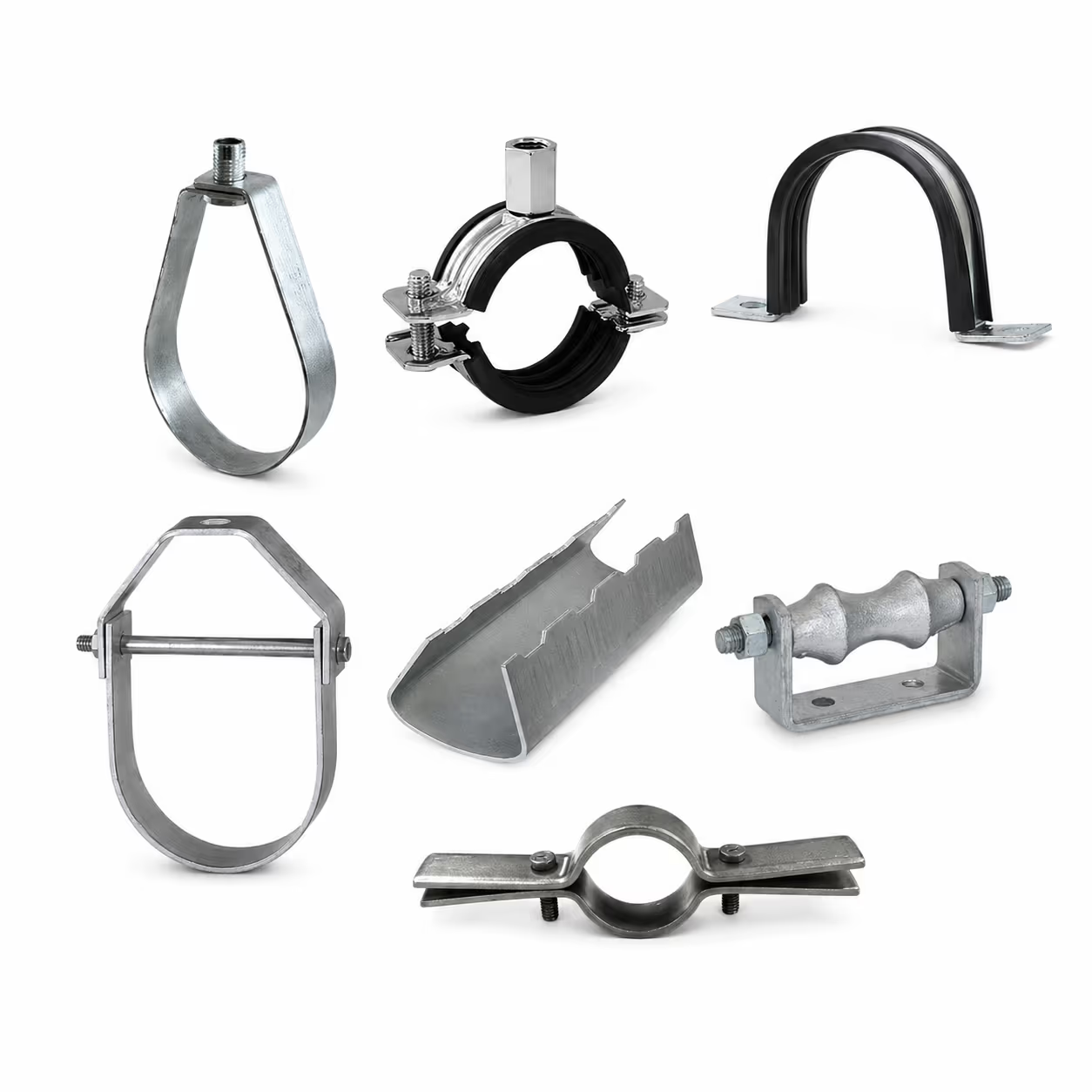
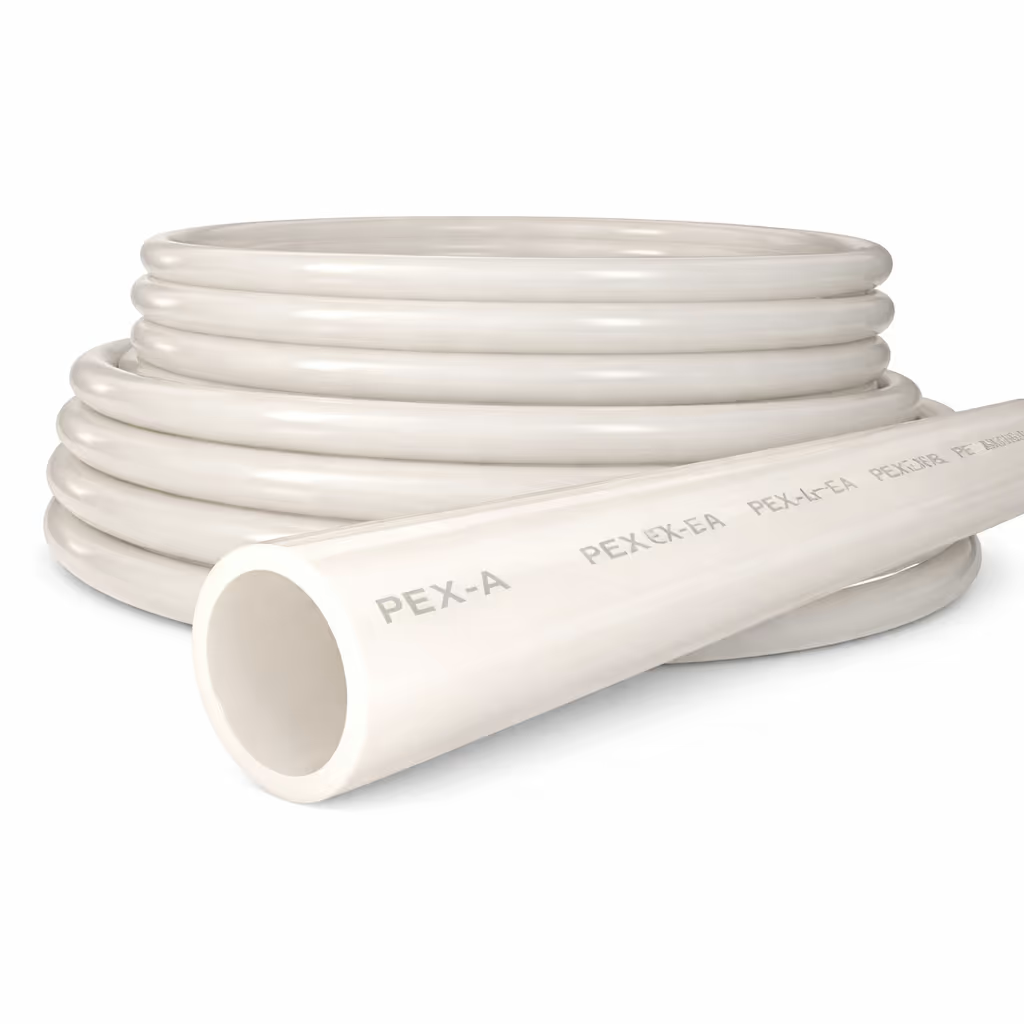
Cross-linked polyethylene piping — PEX — has quietly become the default for new domestic water installations in the GCC. It is flexible, chlorine-tolerant, immune to chloride corrosion, and rated for a 50-year design life at 70°C continuous service. This guide is a working summary of what PEX is, where it belongs on a project, and how the system gets specified and installed in practice.
What PEX actually is
PEX stands for cross-linked polyethylene. The starting material is a polyethylene polymer; cross-linking forms three-dimensional bonds between the polymer chains so the pipe behaves more like a thermoset than a conventional thermoplastic. The practical consequence is that a cross-linked pipe holds its strength at higher temperatures, resists creep under sustained pressure, and recovers its shape after deformation — properties a non-cross-linked PE pipe cannot offer for hot-water service.
Three production methods are used commercially, designated PE-Xa, PE-Xb, and PE-Xc. The most reliable for hot-water and high-pressure plumbing is the peroxide method, designated PE-Xa, which produces the highest and most uniform cross-link density. PE-Xa is the grade specified on most consultant-led plumbing scopes in Kuwait for that reason, and it is the grade we supply across the range described on the PEX piping page.
The performance envelope
For the engineer reviewing a submittal, three numbers matter: the temperature envelope, the pressure rating, and the design life. PE-Xa to EN ISO 15875 is commonly rated for:
- Continuous service at 70°C with a 50-year design life, covering domestic hot-water systems and recirculating loops.
- Short-term peaks to 95°C, which absorbs commissioning temperatures, calorifier swings, and short malfunction events.
- Pressure ratings of PN6, PN8, and PN10 — six, eight, or ten bar at 20°C reference. PN10 is the working baseline for high-rise risers; PN6 is acceptable on low-rise residential branches.
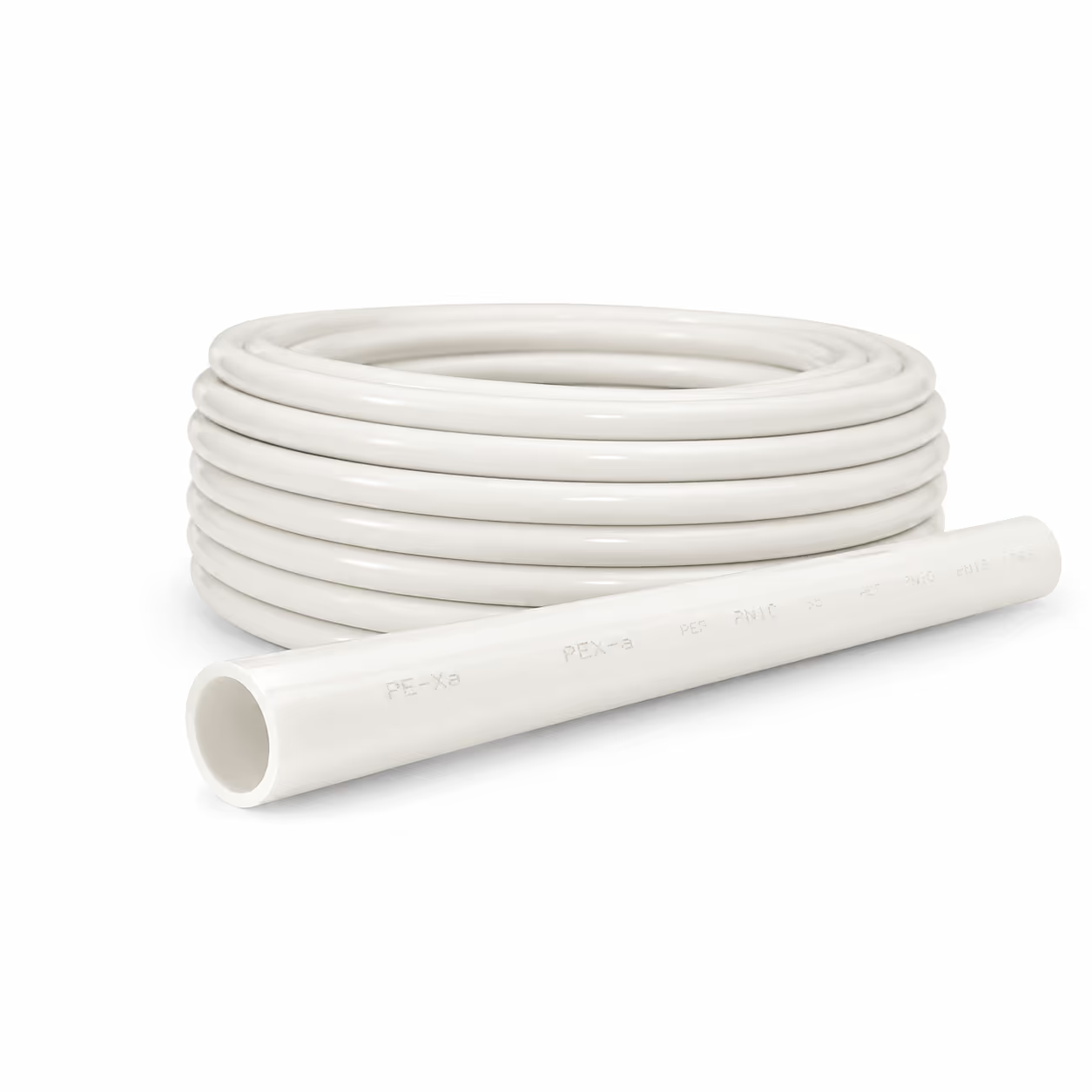
Pipe sizes for plumbing distribution typically run from 16 mmfor branch pipework up to 63 mm on building risers, with larger diameters used for plant connections and limited heating mains. The pipe arrives in long coils — usually 50 m, 100 m, or 200 m — which is why a manifold-fed villa or apartment can be plumbed end-to-end with almost no concealed joints.
Applications — where PEX belongs
PEX has displaced copper and PPR on most new plumbing scopes in Kuwait because it sits comfortably across the full sweep of buildings the local market builds. Below is a working summary of where PEX belongs on the projects our team supplies.
1. Domestic hot and cold water in villas and compounds
The classic application: manifold-fed hot and cold distribution to bathrooms, kitchens, and utility rooms. The manifold lives in the utility cupboard and feeds each fixture on a dedicated PEX run, which means flow is even, balancing is simple, and every fixture has a serviceable shut-off in one place. Concealed joints inside walls and slabs are reduced almost to zero, which is the single biggest reason owners and consultants prefer the system.

2. Residential and commercial towers
High-rise plumbing layouts use PEX for both the riser and the in-suite branches. PN10 pipework on the wet riser carries the static head; PEX in conduit through the slab keeps the in-suite distribution flexible and fully serviceable through the manifold. The combination shortens the plumbing programme and removes the flame work that copper risers require on every floor.
3. Hotels and serviced residences
Hot-water recirculation in hospitality buildings is a demanding service: water sits at 60–65°C for years, with periodic thermal disinfection cycles that can exceed 70°C. PE-Xa is rated for the service and tolerates the chlorine residuals that hospitality systems maintain for legionella control. Acoustically it is also quieter than steel and copper, which matters in guest-room walls.
4. Hospitals and healthcare buildings
Healthcare plumbing has the strictest potable-water requirements of any building type. PE-Xa is manufactured to EN ISO 15875 for hot and cold water, including drinking-water service. It also survives the elevated chlorine doses that healthcare standards sometimes require without losing its design life.

5. Schools, campuses, and public buildings
Long phased programmes, predictable maintenance, and easily accessible service valves are the priorities here. PEX gives all three. Manifold distribution lets the operator shut down a single washroom block without taking the building offline, and the long coils mean fewer joints to investigate when a leak does eventually appear.
6. Underfloor radiant heating
PEX is the usual pipe for radiant floor heating. Cold-room facilities, executive villas with winter underfloor heating, and the chalet market in the GCC all use the same general approach: PE-Xa loops laid on insulation, clipped or stapled, then screeded over. The pipe’s thermal memory and oxygen barrier (when specified) make it suitable for closed-loop heating circuits.
7. Pipe-in-conduit concealed runs
On projects where pipework is buried in slabs, walls, or ground, the PEX pipe is run inside an HDPE conduit. The conduit protects the inner pipe during pour and backfill, and — critically — allows the inner pipe to be pulled out and replaced years later without breaking concrete. It is the cleanest concealed plumbing detail in current practice.
8. Manifold and zone distribution
The brass manifold is what changes the experience on site. Instead of a tree of tees buried in walls, you get a hub that fans out individually to each fixture or zone. Service access, balancing, isolation, and future replacement all collapse to a single point. We supply manifolds, ball valves, and brass fittings as part of the same range so the plumbing package is jointed, balanced, and signed off as one coherent system.
Jointing methods on site
PEX is a flame-free system. Three jointing methods are commonly used, and the right one depends on the pipe size, the access conditions, and the certified installer base on the project:
- Cold-expansion jointing. The pipe end is expanded mechanically with a tool, the fitting is inserted, and the pipe’s thermal memory shrinks it back onto the fitting body to form a permanent joint. Strongest, fastest, and the preferred method on PE-Xa for both hot and cold service.
- Press fittings. A stainless or brass sleeve is mechanically crimped over the pipe and fitting using a press tool. Common on retrofit and refurbishment scopes where the cold-expansion tooling isn’t on site.
- Compression fittings. A nut, ring, and insert mechanically clamp the pipe onto the fitting body. Useful at manifold connections, valve tails, and other serviceable interfaces where the joint may need to be opened again later.
All three are flame-free, which removes the hot-work permits, fire watch, and adjacent-trade coordination that copper soldering needs in every floor riser cupboard. That is a direct programme saving.
Why PEX fits Kuwait conditions
Three local conditions push the specification toward PEX on almost every new plumbing scope:
- Roof temperatures. Storage tanks on roofs commonly reach 50°C in summer, and the cold-water supply downstream of those tanks is warmer than ‘cold’ would imply elsewhere. PE-Xa is rated for the continuous service and shrugs off the daily thermal cycling.
- Chlorinated municipal supply. Local treated water carries significant chlorine residuals. PE-Xa has the highest chlorine resistance of any PEX variant, certified through long-duration testing under elevated chlorine and temperature.
- Chloride-bearing groundwater. Buried copper pits and fails rapidly in chloride-rich soils common across Kuwait. PEX is dielectric and immune to chloride attack, which converts a 15-year liability into a 50-year asset on buried distribution.
PEX compared with PPR and copper
The comparison we give consultants, for new plumbing distribution in Kuwait conditions:
| Criterion | PEX (PE-Xa) | PPR | Copper |
|---|---|---|---|
| Design life at 70°C | 50 years | 50 years | 25–40 years in chlorinated water |
| Chlorine resistance | Highest in PEX class | Moderate | Not relevant — metallic |
| Chloride / saline groundwater | Immune | Immune | Pits and fails |
| Jointing | Cold-expansion / press / compression | Heat fusion | Brazing — flame work |
| Concealed runs | Pipe-in-conduit, replaceable | Direct, fused joints | Direct, soldered joints |
| Acoustic behaviour | Quietest — damps water hammer | Quiet | Transmits hammer noise |
PPR remains a viable system, particularly where the contractor base is already certified on heat-fusion. The trade-off is at the joints: every PPR fitting is a fused interface buried in a wall or slab, while a PEX system places its joints at the manifold where you can reach them.
The advantage of PEX is not the pipe — it is where the joints are. Putting them at the manifold instead of inside the slab is what changes the building.
Standards, certification, and submittals
For consultant approval on a Kuwait project, the documentation pack typically needs to include:
- EN ISO 15875 — the controlling product standard for PEX for hot and cold water systems. Compliance evidence covers material, dimensions, long-term hydrostatic strength, and thermal cycling.
- Potable-water approvals — depending on the project, consultants ask for any of WRAS, KIWA, DVGW, or NSF-61 evidence.
- Chlorine resistance testing — ASTM F2023 or equivalent, confirming long-duration performance at elevated chlorine and temperature.
- Design-life calculation for the pressure class and operating temperature stated in the BOQ.
- Installation guide and jointing certification for the chosen jointing method, including the tool list and the certified installer roster.
For a quick reference on what we hold and what is in the catalogue, see the catalog page; for the full product range with sizes and applications, the PEX piping product pageis the working source. A project-focused summary of the PEX pipes we supply in Kuwait — coils, pipe-in-conduit, manifolds, and brass fittings — is also available.
Selection notes for project teams
- Get the pressure class right. Default to PN10 on towers and buildings with significant static head. PN6 is acceptable on single-storey residential branches.
- Default to PE-Xa. The chlorine resistance and the cross-link uniformity are worth the small premium over PE-Xb on every project we have delivered.
- Plan the manifold layout early. The number, location, and accessibility of manifolds is what determines whether the rest of the system works. They want to be in serviceable utility cupboards, not behind tile.
- Use pipe-in-conduit on every concealed run. The cost premium is small; the future replaceability is enormous.
- Check the certified installer base. Cold-expansion is fastest, but only if the contractor has trained crews and the right tooling.
Frequently asked questions
What does PEX stand for, and is it safe for drinking water?
PEX is cross-linked polyethylene. PE-Xa is manufactured to EN ISO 15875 for hot and cold water, including drinking water, and is a standard choice for new plumbing distribution in residential, hospitality, and healthcare buildings.
What sizes and pressure ratings do you supply?
Our standard PE-Xa range covers 16 mm to 63 mm in PN6, PN8, and PN10 ratings, with white opaque pipe for visible runs and pipe-in-conduit for concealed installations. See the PEX pipes section for the working scope.
Is PEX appropriate for hot-water recirculation in hotels?
Yes — this is one of PEX’s strongest applications. PE-Xa handles continuous 70°C service and the elevated chlorine that hospitality systems maintain for legionella control.
Can PEX be buried in concrete?
Yes, when run inside an HDPE conduit. The conduit protects the inner pipe through the pour and lets it be pulled out and replaced later if required. Direct encasement of the inner pipe is not standard practice.
How do I get a quote for a Kuwait project?
Send the BOQ, plumbing schedule, or a drawing take-off through the contact page and our technical team will return a priced offer with PE-Xa selections, manifold sizing, and submittal documentation notes.
Send the riser diagram, fixture schedule, or plumbing BOQ and we return a pipe, fitting, and manifold take-off with the EN ISO 15875 documentation your consultant will ask for.
Also useful:PEX pipes supplied in KuwaitLined clamps for PEX runsPipe supports & hangers